A onewheel electric skateboard is a self-balancing single-wheel electric board. Riding is a unique floating experience, somewhat like a skateboard but with superior carving possibilities (even uphills) and with a sensation much like snowboarding or surfing. They are very popular amongst skateboaders and anyone that wants a very cool and fun way to get around, both on and off road.
There are three principal manufacturers of onewheel electric skateboards:
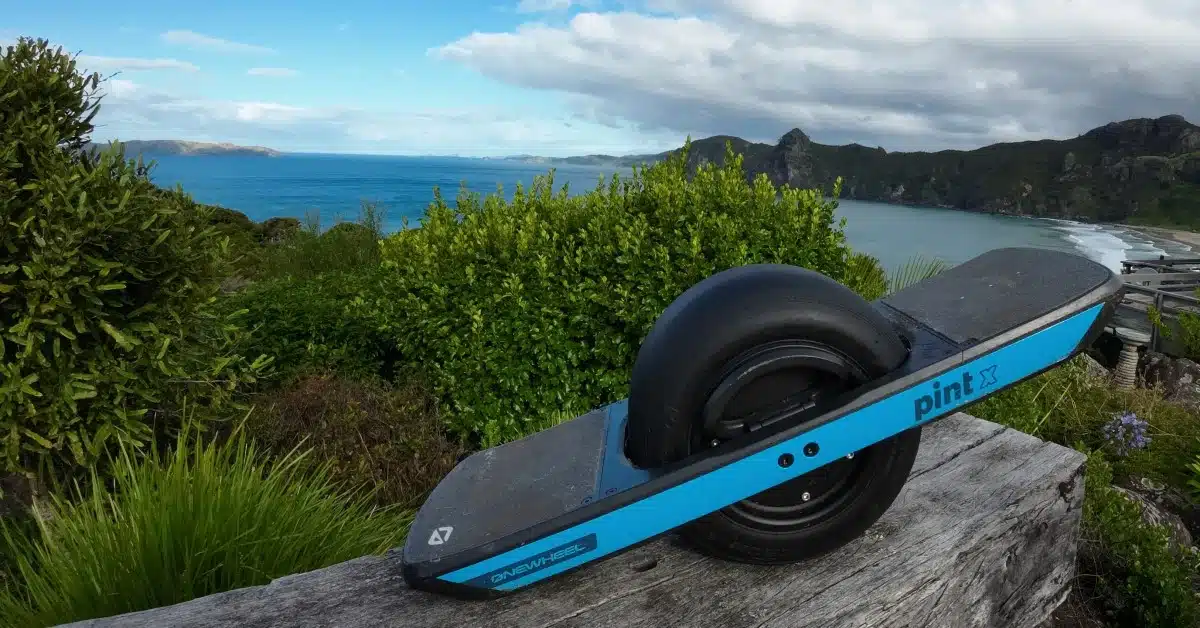
- The Onewheel is the largest selling brand in the US, produced by Future Motion in Santa Cruz (California). The current Onewheel models are the smaller and more nimble Pint X, the larger and longer range GT, the more powerful GT S-Series and in 2025 the 113 Volt GT-S Rally XL. Older models include the original Pint (still in production) and the ever popular (but discontinued) XR. In the US in 2023 all Onewheels were subject to a safety recall by the CPSC and introduction of haptic buzz to help warn of unexpected potential cutouts, something we’ve experienced firsthand ourselves even at lower speeds.
- The Chinese manufacturer Floatwheel originally made popular do-it-yourself self-balancing board kits. In 2023 they introduced their first two complete boards to challenge Future Motion’s dominance in the marketplace, the Floatwheel adv and the adv pro. Both are based on the open-source VESC software, support the right to repair/modify a board, and use a new high-torque CannonCore motor. They also make conversion kits for Onewheel models. The new Floatwheel adv2 has an improved battery management system to provide extra safety and battery protection when charging, an improved version 3 motor with N52 curved magnets, and Samsung 50S battery cells with 720 Wh capacity – the largest for any commercial onewheel. Floatwheel has also announced the upcoming release of a 10 kg Atom onewheel.
- Fungineers is a UAE-based company that designs and sells electric boards and outdoor electric rideables for enthusiasts. Their product lineup includes performance electric rideables and conversion kits for riders looking to upgrade their existing onewheels. Fungineers manufacture the powerful Superflux motor generally considered the best onewheel motor, and the popular Thor controller. At the end of 2024 they announced they would also sell the Funwheel X7 (Sport), a complete board using the Superflux, Thor301, and their own Stompies footpad sensor. Unlike the GT, GT S, and adv2 the X7 is designed to be compatible with the original Onewheel XR accessories, so many third-party accessories can be used. Its 432 Wh battery is UN 38.3 certified but has smaller capacity than the battery in the GT and adv2. In 2025 Fungineers released their X7 Long Range 720 Wh variant, matching the range of the Floatwheel adv2. They also released a 134 Volt high voltage X7 Supercharged with the Thor400 controller, high-torque motor and high-discharge RS50 battery pack, having a free spin speed of 115 km/h it is the most powerful onewheel commercially available. In 2026 they announced the Zeus500 controller for builds up to a staggering 168 Volt.
Onewheels, Floatwheels, Funwheels in NZ
Future Motion offers Onewheels for sale through their US website, with delivery possible to New Zealand. They can also be purchased online through third-party retailers. Their warranty however explicitly excludes Products purchased from an unauthorised reseller, including any online purchase other than directly from Future Motion. As in Australia many Onewheel warranty and service claims require the board to be sent back to California for repair, whose delay can breach the promptness required under New Zealand’s Consumer Guarantees Act. Typically authorised retailers of Future Motion products are barred from also selling competing products or third-party accessories.
The Floatwheel has proved to be a popular and more powerful alternative to the Onewheel in the DIY community, and allows full right-to-repair. Orders of the adv2 with cryptocurrency payment are available directly through Floatwheel, and Atomic EV will aim to have them available in NZ once their adv2 teething issues are resolved and Tony at Floatwheel starts allowing retail distribution. Since December 2023 Floatwheel and Future Motion have been locked in litigation in the US over potential patent infringements. For this reason Floatwheel requires cryptocurrency payment for purchases, one of the few legitimate companies on the web that requires such payments. Further information can be found on the Floatwheel discord server, please just contact us if you’d like to be sent an invite link to join.
Fungineers opened sales of their fully-assembled Funwheel X7 in early 2025, an even more powerful and dependable alternative to Onewheel. Further information can be found on the Funwheel discord server, please just contact us if you’d like to be sent an invite link to join. Since September 2025 Atomic EV has been the authorised Fungineers distributor for NZ and neighbouring countries with one-year warranty support and right-to-repair, allowing customers to add their own third-party components. Please note that the X7 is in very high demand internationally so NZ stock is limited.
-
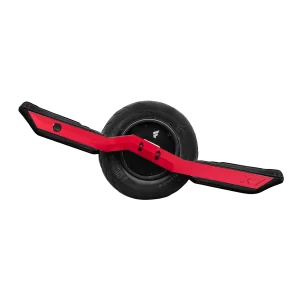 Fungineers Funwheel X7 Supercharged$6,299.00
 -
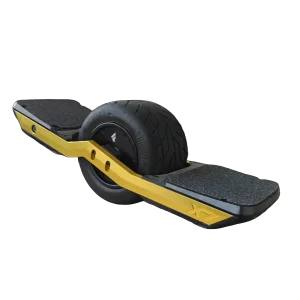 Fungineers Funwheel X7 Long Range$5,499.00
 -
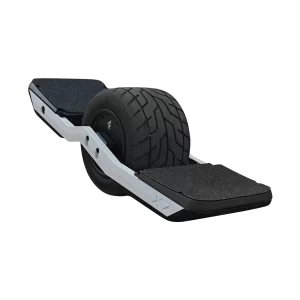 Fungineers Funwheel X7 Sport$4,699.00

Comparing Popular Models
| Model | Range | Top Speed | Charge Time (optional fast charger) | Weight | Motor | Battery | Voltage | Torque |
|---|---|---|---|---|---|---|---|---|
| Onewheel Pint X | 19-29 km | 29 km/h | 225 (110) minutes | 12.2 kg | 750 Watt | 324 Wh | 63 Volt | 22 Nm |
| Onewheel GT | 32-52 km | 32 km/h | 200 (90) minutes | 15.9 kg | 2726 Watt | 525 Wh | 75 Volt | 26.6 Nm |
| Onewheel GT S | 26-40 km | 40 km/h | 150 (80) minutes | 15.0 kg | 3913 Watt | 437 Wh | 113 Volt | 31.3 Nm |
| Onewheel Rally XL | 29-45 km | 40 km/h | 165 (85) minutes | 15.4 kg | 3913 Watt | 485 Wh | 113 Volt | 46 Nm |
| Floatwheel adv2 | 56-72 km | 40 km/h | 240 (50) minutes | 17.7 kg | 4470-5960 Watt | 720 Wh | 84 Volt | 52.7 Nm |
| Funwheel X7 Sport | 24-40 km | 56 km/h | 60 minutes | 16.3 kg | 4000+ Watt | 432 Wh | 84 Volt | 50 Nm |
| Funwheel X7 Long Range | 40-65 km | 56 km/h | 100 minutes | 17.7 kg | 4000+ Watt | 720 Wh | 84 Volt | 50 Nm |
| Funwheel X7 Supercharged | 32-42 km | 65+ km/h | 60 minutes | 17.2 kg | 6500+ Watt | 576 Wh | 134 Volt | 80 Nm |








Protective Gear
One-wheeled skateboards can quickly accelerate to 30 km/h suitable personal protective gear should be worn while riding. At a minimum a helmet and wrist protection is essential at all times. Knee and elbow pads are also recommended, along with leading-shoulder protection if pushing higher speeds. There is always a potential risk of nose diving on many models.
At higher speeds a full-face helmet and abrasion resistant armoured clothing is also recommended.
Learning to Ride a Onewheel
Most people can pick up the basics of riding a one-wheeled skateboard within one or two hours, but mastering riding can be deceptive so patience in pushing the bounds is smart.
Atomic EV offers free demos in our showroom, where you can test ride one of our wheels in a safe environment regardless of the weather. For customers that want more support we are happy to explain the basics of riding, board safety and maintenance, and provide a hands-on experience with our boards.
VESC boards allow many complex configurations, which are summarised in Jay from Fungineers Intro to VESC video.
Frequently Asked Questions about Onewheels
What is a onewheel?
A onewheel is a self-balancing electric board with a single large wheel positioned between front and rear footpads. The board uses an electronic control system and motor to keep itself balanced while it is ridden. The front footpad typically has a pressure sensor to detect when a rider is on the board.
Once the power is turned on the motor is engaged once the board is leveled and pressure detected on the front footpad. When pressure is not detected on one side of the footpad and the board brought to a stop the motor disengages, allowing the rider to step off.
Onewheels combine elements of skateboarding, snowboarding and surfing, allowing riders to carve, cruise and ride over a variety of surfaces.
Strictly speaking, Onewheel is a brand name belonging to Future Motion. The term is also commonly used more generally to describe single-wheel self-balancing electric boards.
We have an article with everything to know about onewheels.
What is a VESC onewheel?
VESC is an acronym for Vedder Electronic Speed Controller, named after its creator Benjamin Vedder. VESC is an open-source motor-controller platform used in many types of electric vehicles and other applications.
A VESC onewheel is a single-wheel self-balancing electric board using a VESC-based controller rather than the proprietary controller used in a Future Motion Onewheel. It has become particularly popular within the onewheel community because it provides extensive control over the motor and self-balancing system, and allows a lot more freedom in the choice of components within a onewheel – supporting the right-to-repair movement.
VESC-based systems can be used in purpose-built onewheel boards or in converted onewheels. VESC provides a high degree of control over the behaviour of the board. There are various manufacturers that make VESC onewheel components and an active community that supports their software and configuration. Two manufacturers, Floatwheel and Fungineers also provide complete ready-to-ride onewheel boards.
Is it easy to ride a onewheel?
Most people can learn the basics of riding a onewheel relatively quickly, but it does take practice to become comfortable. People with a background in riding any type of board, or who are naturally balanced pick up riding very quickly, but anyone can successfully learn to ride. Onewheels have wide tyres making the balancing somewhat easier than for other self-balancing PEVs.
Most important is to always ensure the front foot is disengaged from the front footpad before removing the rear foot. Also remember to be subtle in shifting weight when accelerating and braking. Until heel lift stops are mastered learners can also benefit by activating reverse stop so that moving the onewheel in reverse disengages the motor.
We recommend starting on a flat, open surface away from any vehicles or walls. Ride at low speed and learn how to mount and engage the motor, heel lift and dismount, accelerate, slow down and stop before attempting hills, trails or higher speeds.
Atomic EV is always happy to help potential customers try a few onewheel boards in our showroom and teach the basics of riding.
Are onewheels safe?
Onewheels are fun but, like electric skateboards, e-bikes and other personal electric vehicles, they can cause serious injury if ridden incorrectly.
Most important is to not risk overpowering the electric motor – doing so can result in a cutout and ejection of the rider (usually a fall onto the ground). Future Motion Onewheels in particular were notorious for cutouts due to weak motors and random electronic failures. This lead to the Consumer Product Safety Commission (CPSC) warning US riders in 2023 to stop riding their Future Motion Onewheels, forcing Future Motion to add modest safety improvements such as haptic buzz. Their newer high-end models such as the GT-S XL are much more reliable.
VESC onewheels generally provide more powerful motors such as the Fungineers Superflux and well-tested open source control software. They include configurable alerts and duty cycle measurements of motor load, so cutouts were usually only a result of misconfigured boards. Unlike Future Motion boards, VESC does provide the rider very extensive control over the board and its configurations, so care should be taken to not mess with any unfamiliar settings: “With great power comes great responsibility”.
Always wear appropriate protective equipment when riding a onewheel, particularly a helmet. Most serious onewheel injuries have been a result of not wearing a helmet. Wrist guards, knee pads and elbow pads are recommended, especially while learning.
Ride within your ability and understand the limitations of your particular board.
Are onewheels legal in New Zealand?
Any onewheel is allowed to be purchased in New Zealand and ridden on private property. As they contain powerful LI batteries they cannot be transported on commercial airline flights, and transportation on cargo flights or via sea requires safety data sheet documentation and packaging certification (making international freight of used onewheels with their batteries complicated).
Like with electric skateboards we have found the NZ public generally very accepting of onewheels, with them being treated much like unpowered skateboards. In general they get ignored when carried through shopping centres, offices, public spaces and on public transportation (unlike most electric scooters or e-bikes which are often prohibited and must be left outside).
Current NZTA regulations date back to 2018 and only allow for PEV with motors up to 300 Watt to be used on public roads, which excludes all onewheels and most of the private electric scooters that are commonly seen in public. However, onewheels and other PEVs have been widely tolerated for use in public provided they are ridden responsibly without putting the rider or others at risk or causing annoyance. To date no rider in New Zealand has been fined nor had their board confiscated.
How fast can onewheels go?
Onewheel top speed depends on the particular model and configuration.
VESC-powered boards can also be configured for different performance characteristics, but increasing speed and power can increase the risks associated with riding.
Future Motion onewheels have top speed between 30-40 km/h depending on the model. Fungineers onewheels with Superflux high speed motors are substantially faster, with at least 56 km/h, some over 65 km/h, and are often chosen by racers in competitions.
Atomic EV recommends choosing a setup appropriate for your experience rather than simply selecting the highest possible speed.
Can I ride a onewheel in the rain?
Many onewheels can tolerate some exposure to water, more so than most electric skateboards, less so than EUCs, but water resistance is not the same as being waterproof.
Avoid riding through deep water, flooding and prolonged heavy rain. Water can damage bearings, electronics, connectors and batteries. Salt water will inevitably cause corrosion.
Never charge a wet board until it has been inspected and is completely dry.
Riders that cannot avoid wet conditions can badger their onewheel, applying flowable silicone to port seals, battery housing, connectors, footpads, and controller housing, and then verifying there are no air leaks using a sniffer tool. While badgering doesn’t protect the bearings it does improve the water resistance of the electronic components.
How can I get started with my new Fungineers X7?
We have written a Fungineers X7 quick start guide for the Fungineers community, which Jay has also turned into a video.
What accessories can I use on my onewheel?
Onewheels are very customisable, and are quite easy to “pimp out” to have the onewheel reflect your individuality. There are several companies that specialise in onewheel accessories:
- Riders often prefer to swap the stock tyre provided by the manufacturer to one of the onewheel tyres offered by third-party tyre manufacturers, including The Float Life Enduro, Street Pro 2, Trail Pro II, ThunderCat, the FlightFins GOAT, or some of the kart range from Hoosier Racing Tire or Burris Racing.
- A fender is attached to both footpads and passes over the top of the tyre, avoiding debris and water being flicked up onto the rider’s legs.
- Foot hooks are popular amongst riders that do jumps, challenging trails or tricks that require the feet to stay in contact with the board. Generally the hooks are either mounted onto the bumpers at the outside edge of the footpads, or are fins mounted to a fender on the inside edge of the footpads.
- Gripples are a creation by The Float Life designed to give feet extra traction on the footpads. They have also been found to help reduce footpad sensor engagement issues, provide some rail protection and add more colour to boards.
- A handle is another important accessory, especially for the heavier onewheel models.
There are numerous accessories to provide better water and dust ingress protection, including charger plugs, bearing protection, and badger waterproofing kits. There are also many 3D models freely available for those riders that have access to a 3D printer.
Why should I purchase my onewheel from Atomic EV?
With many of the repairability requirements Future Motion enforces on their Onewheels and limited right-to-repair, outside the US the VESC onewheels are the smartest choice.
Fungineers produce the X7 range of onewheels, all ready to ride straight out of the box. They are extremely popular with a wide range of riders: weekend cruisers, people who want to enjoy their daily commute, riders hitting the trails, or those that want dependable performance.
Atomic EV is the Fungineers authorised distributor in NZ and the South Pacific, so all legitimate sales are made through us. Being a New Zealand registered company ensures customers are protected under the Consumer Guarantees Act, and when you contact us you know you’ll be able to reach us quickly.
We also have a few onewheels in our showroom which prospective customers can try for free and we are always happy to help customers get started riding. We are keen X7 riders and always allow onewheels from any brand to join our group rides and other events.
Atomic EV is also the authorised warranty and service centre for all our brands and holds stock of the most common OEM parts to ensure we get our customers back riding quickly. Our service agreements with the manufacturers ensure we have direct access to technical support for each brand so can work with them to more quickly resolve any complex issues and to receive additional parts for repairs.